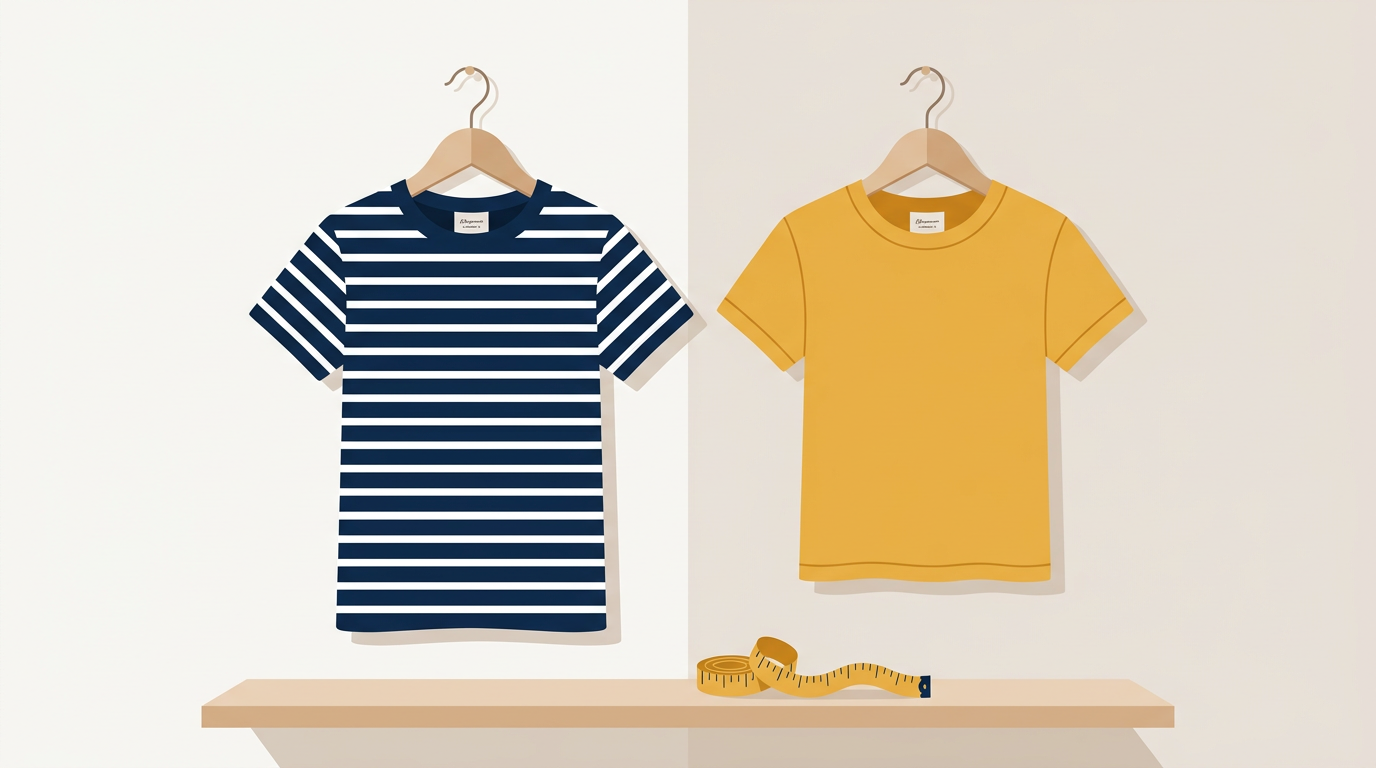
Why children’s clothing sizes vary between brands
Learn why kids’ clothing sizes differ between brands and how to choose a better fit using measurements instead of age labels.
Last updated
The same label can fit differently
If your child fits size 122 in one brand but needs 128 in another, you are not alone. Children’s clothing sizes often vary between brands, even when the size label looks the same.
This happens because clothing sizes are not just numbers. They are the result of design choices, target markets, garment types, materials and brand-specific fit models.
Brands use different fit models
Each brand decides what body shape and proportions its clothes are designed for. One brand may create a slimmer fit, while another may design clothes with more room around the waist, hips or shoulders.
This means two garments with the same size label can feel completely different.
Age-based sizing is only an estimate
Many UK and US children’s clothes use age labels such as 5–6 years or size 6. These labels are easy to understand, but children of the same age can differ significantly in height and body shape.
Growth charts show broad patterns across populations, but they are not intended to predict the exact size of a specific child’s clothes.
EU sizes are height-based, but fit still varies
EU children’s sizes are usually linked to height in centimeters, which can make them more measurement-based than age-only systems. But height alone does not describe the whole body.
Two children who are both 122 cm tall may have different waist, leg, chest or arm measurements.
Garment type, fabric and market matter
A T-shirt, winter jacket, pair of jeans and swimsuit all fit differently. Some garments are designed to be close-fitting. Others are designed with layering, movement or growth room in mind.
Stretchy fabrics can tolerate more variation in body shape. Woven fabrics, denim and structured outerwear usually offer less flexibility. Adjustable waists, ribbed cuffs and straps can also affect how long a garment stays useful.
A brand selling mainly in one country may follow local size expectations. A global brand may adapt sizing by region or product line, so international conversion charts should be treated as approximate.
How to avoid buying the wrong size
The best approach is to combine three things before buying.
- Your child’s current measurements
- The brand’s own size chart
- The garment type and season of use
Frequently asked questions
Why does one brand’s size 122 fit like another brand’s 128?
Brands choose different fit models, fabric stretch and garment cuts. The label is a guide, not a universal standard.
What measurements should I use before buying kids’ clothes?
Height is the starting point for most clothing. Chest, waist, hips and leg length become more important for fitted items, trousers and outerwear.