How WhatSizer calculates size recommendations
Learn how WhatSizer uses child measurements, sizing systems and growth logic to recommend clothing and shoe sizes.
Last updated
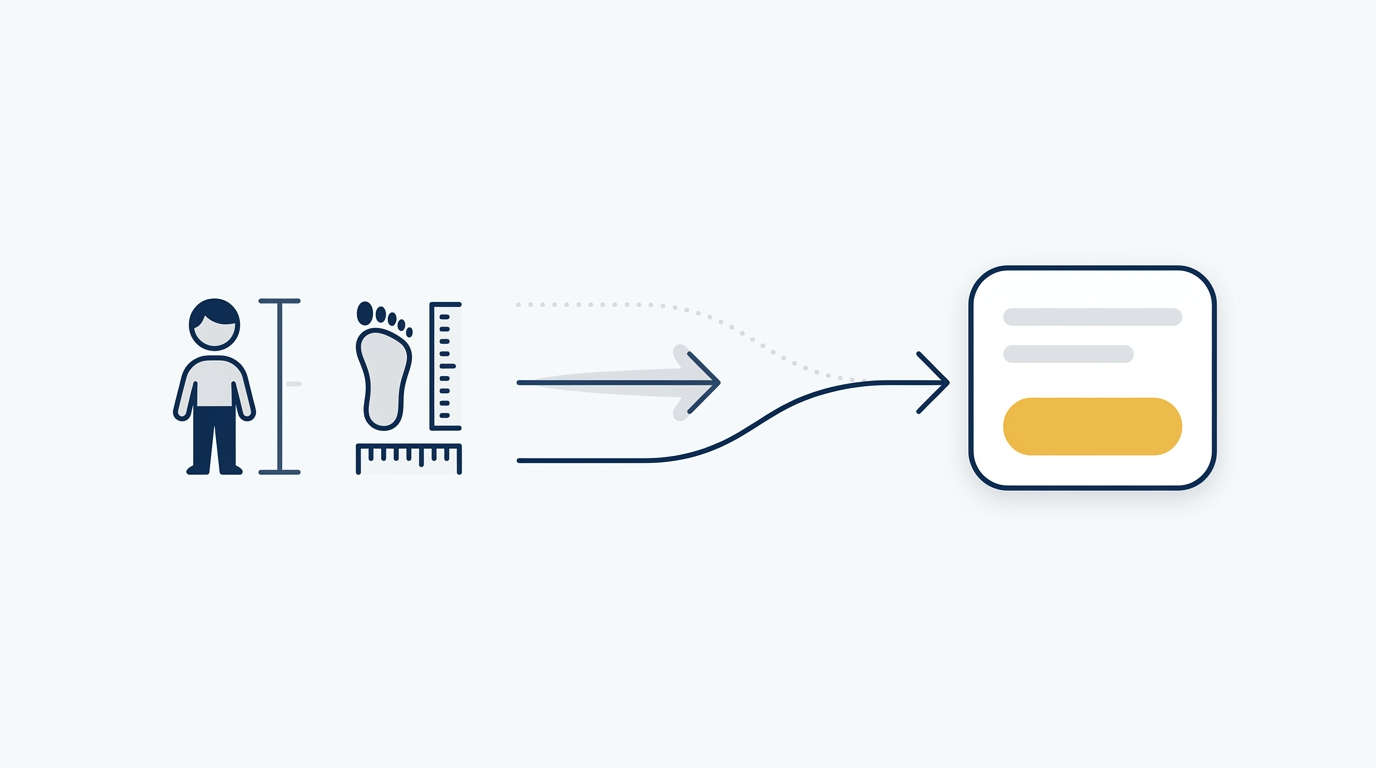
We start with the child’s measurements
WhatSizer helps parents choose children’s clothing and shoe sizes using real measurements instead of guesswork. The goal is to make it easier to buy the right size now and plan for upcoming seasons.
For clothing, height is usually the strongest starting point, especially in EU sizing where children’s sizes often map to height in centimeters. For shoes, foot length is the key measurement. A child’s age can help with growth forecasting, but it should not be the only basis for size selection.
We match measurements to size systems
Different markets use different sizing systems, so WhatSizer translates measurements into the relevant size system for the selected region.
- EU clothing sizes often use height in centimeters.
- UK clothing sizes often use age ranges.
- US clothing sizes often use numeric child sizes or toddler labels.
- Shoe sizes vary between EU, UK and US systems.
We consider the product category
Not all products should be sized in the same way. A T-shirt, winter jacket, pair of jeans and pair of shoes each have different fit requirements.
- Outerwear may need extra room for layering.
- Trousers may depend more on waist and leg length.
- Shoes depend on foot length and fit allowance.
- Seasonal clothes may need to last several months.
We estimate future size needs
When planning ahead, WhatSizer can use the child’s current measurement and expected growth direction to estimate a future size. Growth references such as WHO standards and CDC growth charts can help understand growth patterns, but individual children can grow differently.
The result should be understood as a planning estimate, not a medical or guaranteed prediction.
We show a practical recommendation
The final recommendation is designed to answer a practical question: which size is most likely to work for this child, in this category, for this market?
Where relevant, WhatSizer may recommend a current size and a forward-looking size for an upcoming season. It also keeps uncertainty visible because brand fit, fabric, garment cut and individual body proportions all affect real-world sizing.
Best use of WhatSizer
For the best result, keep measurements recent and compare the recommendation with brand-specific size charts for expensive or fitted items.
- Use recent measurements.
- Measure height without shoes.
- Measure both feet and use the longer foot.
- Update measurements before a new season.
- Check brand-specific size charts for expensive or fitted items.
Frequently asked questions
Does WhatSizer guarantee a perfect fit?
No size calculator can guarantee a perfect fit across every brand. WhatSizer reduces guesswork by using measurements, category logic and regional sizing systems.
Why does WhatSizer ask for real measurements?
Measurements are more reliable than age labels. Height helps clothing recommendations, and foot length helps shoe recommendations.