Common measuring mistakes parents make
Avoid common measuring mistakes when choosing children’s clothing and shoe sizes. Learn how to measure height and foot length more accurately.
Last updated
Good sizing starts with good measurements
Small measuring mistakes can easily lead to buying clothes that are too small, shoes that are uncomfortable or seasonal items that do not last.
The goal is not perfect precision. It is to avoid the common errors that make measurements less useful.
Mistakes with height
Height should be measured without shoes. Shoes can add extra centimeters and lead to choosing a size that is too large.
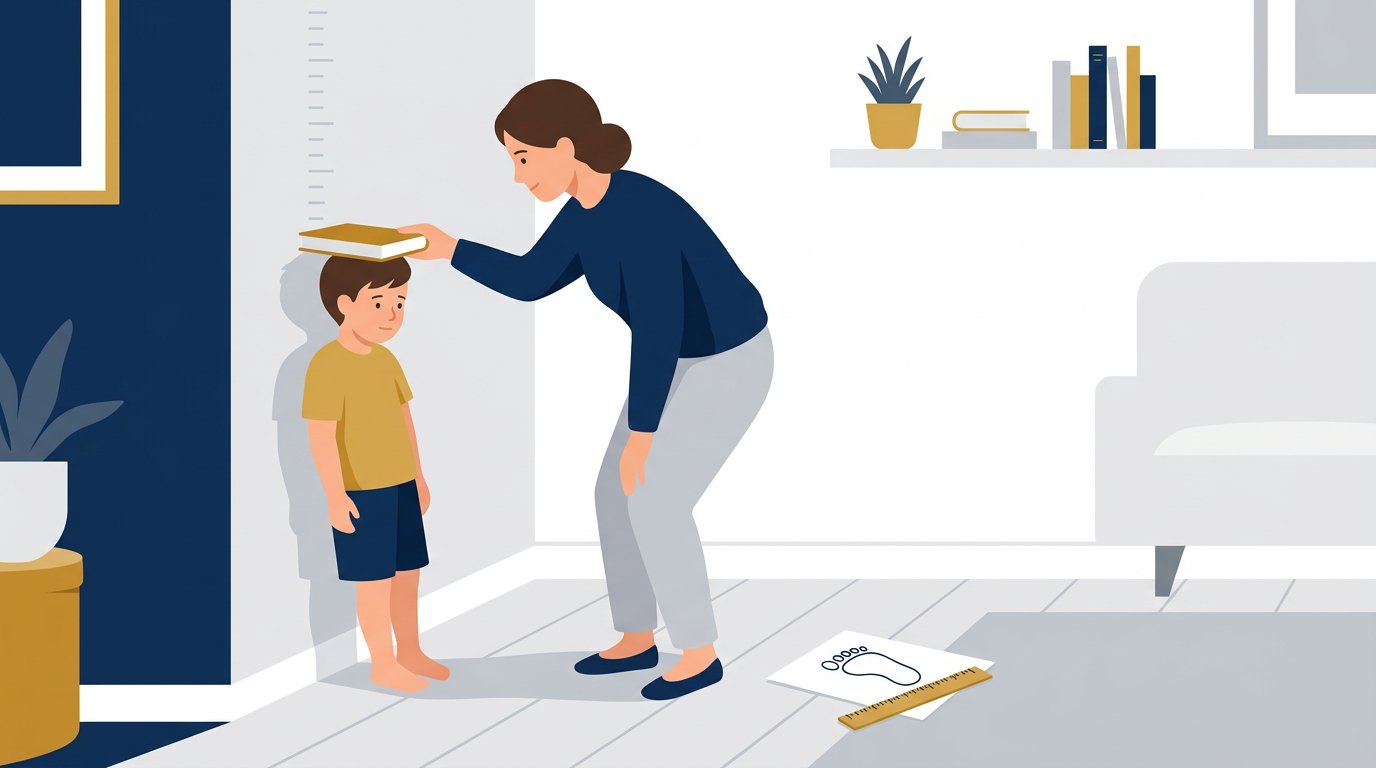
Ask your child to stand straight against a wall, with heels close to the wall and eyes looking forward. Mark the top of the head and measure from the floor to the mark.
Old measurements can also mislead you. Children grow quickly, especially during early childhood and puberty, so a measurement from six months ago may no longer be useful.
Mistakes with feet
Children’s feet are often slightly different sizes. Measure both feet and use the longer foot when choosing shoes.
Feet spread slightly when a child stands. For shoe sizing, measure while the child is standing with weight on the foot. This gives a more realistic foot length.
Mistakes with body measurements
When measuring chest, waist or hips, the tape should sit close to the body but not squeeze. If the tape is too tight, the garment may end up uncomfortable.
Age-based sizes are convenient, but they are not precise. Children of the same age can have very different heights and proportions. Use age as a rough guide only.
Mistakes with product context
A winter jacket, swimsuit, hoodie and pair of jeans should not all be sized the same way. Some garments need room for movement or layering. Others need a closer fit.
If you buy clothes for a future season, use the expected time of use. A jacket bought in September may need to fit until March. Sandals bought in May may need to last through August.
Even when you know your child’s measurements, brands can differ. Always check the brand’s own size chart for expensive, fitted or seasonal items.
Better measuring habits
Build a simple measuring routine before shopping.
- Measure height without shoes.
- Measure both feet.
- Use recent measurements.
- Update measurements before each season.
- Check brand-specific size charts.
- Consider whether the item is for now or later.
Frequently asked questions
How often should I update measurements?
Update before seasonal shopping, before buying shoes, after visible growth spurts, and whenever clothes or shoes start feeling tight.
Is measuring height enough?
Height is a strong starting point for clothing, but waist, chest, hips, leg length and foot length can matter depending on the product.